

If you’ve been trying to rank your website higher on Google, you’ve probably noticed something frustrating: what worked two years ago barely moves the needle today. Search engines have changed. AI-driven results, stricter quality signals, and smarter algorithms have reshaped what “good SEO” actually means.
The good news? Ranking well in 2026 isn’t about chasing every new trend. It’s about focusing on the factors that genuinely influence how Google evaluates your website — and ignoring the noise.
In this guide, we’ll break down the 15 SEO ranking factors that matter most right now, explain why they work, and show you how to apply them to your own website — whether you run a small business, an eCommerce store, or a service-based company.
Why Ranking Factors Have Changed So Much
Search engines today do far more than match keywords. They evaluate context, intent, experience, and trust. Google’s algorithm updates over the past few years have consistently rewarded websites that provide real value to users and penalised those relying on shortcuts like keyword stuffing or thin content.
With AI Overviews and generative search results now appearing above traditional listings, competition for visibility has become tougher — but also fairer. Websites that genuinely serve their audience tend to rise to the top.
Let’s look at what’s actually driving rankings today.
1. Search Intent Alignment
Google’s number one priority is understanding what the searcher actually wants — and matching content to that intent. There are generally four types of intent: informational, navigational, transactional, and commercial investigation.
Before writing content, ask: “What is the person searching for actually trying to accomplish?” A page that matches intent precisely will consistently outperform a page that’s simply keyword-optimised but misaligned with what the user needs.
2. Content Depth and Comprehensiveness
Thin content no longer competes. Pages that thoroughly answer a topic — covering related subtopics, common questions, and practical examples — tend to rank higher because they satisfy the searcher completely, reducing the need for them to click back and search again.
This doesn’t mean padding your content with fluff. It means genuinely covering the topic from multiple angles.
3. E-E-A-T (Experience, Expertise, Authoritativeness, Trustworthiness)
Google continues to prioritise content created by people with real experience and expertise. This is especially important for topics related to health, finance, and major purchasing decisions — but it applies broadly.
Adding author bios, citing credible sources, and demonstrating first-hand experience (case studies, original data, real examples) all strengthen E-E-A-T signals.
4. Core Web Vitals and Page Experience
Site speed, visual stability, and interactivity remain critical ranking signals. A slow-loading page frustrates users and increases bounce rates — both of which negatively affect rankings.
Focus on:
- Fast server response times
- Optimised images and lazy loading
- Minimal layout shifts as the page loads
- Mobile responsiveness
5. Mobile-First Experience
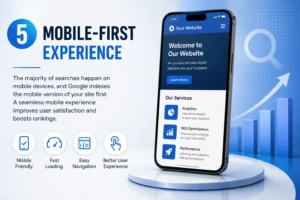
The majority of searches now happen on mobile devices, and Google indexes the mobile version of your site first. If your mobile experience is clunky, slow, or hard to navigate, it will hurt your rankings — regardless of how good your desktop site looks.
6. Backlink Quality Over Quantity
Not all backlinks are created equal. A handful of links from reputable, relevant websites will outperform hundreds of low-quality links from spammy directories.
Focus your link-building efforts on:
- Guest posting on respected industry sites
- Earning links through original research or data
- Building relationships with journalists and bloggers in your niche
7. Topical Authority
Google increasingly rewards websites that demonstrate deep expertise in a specific subject area rather than covering many unrelated topics superficially. Building a cluster of interlinked content around your core services helps establish your site as an authority.
For example, a digital marketing agency benefits more from a well-organised hub of SEO, content marketing, and PPC articles than from scattered posts on unrelated subjects.
8. Structured Data and Schema Markup
Schema markup helps search engines understand your content more precisely — and can help you earn rich results like FAQs, star ratings, or product details directly in search listings. This improves click-through rates even without a ranking change.
9. User Engagement Signals
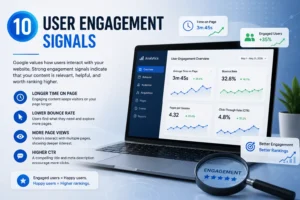
While Google is cautious about confirming exact ranking weight, engagement metrics like time on page, scroll depth, and return visits correlate strongly with high-performing content. Content that genuinely holds attention tends to rank and stay ranked.
10. Internal Linking Structure
A well-organised internal linking strategy helps search engines discover and understand the relationship between your pages. It also distributes “authority” across your site, helping newer or less-visible pages gain traction faster.
11. Content Freshness
For certain industries — particularly fast-moving ones like technology, marketing, and finance — regularly updating existing content signals relevance to search engines. This doesn’t mean republishing daily, but reviewing and refreshing key pages every few months keeps them competitive.
12. AI Search Optimisation (AEO/GEO)
With AI Overviews and tools like ChatGPT increasingly influencing how people find information, optimising for “answer engine” visibility matters more than ever. This means structuring content with clear, direct answers, using question-based headings, and providing concise summaries AI systems can easily extract.
13. Secure and Accessible Website (HTTPS, Accessibility)
Security remains a baseline requirement. Websites without HTTPS are flagged as “not secure” and lose user trust instantly. Accessibility — clear navigation, readable fonts, proper alt text — also contributes to a better overall user experience, which search engines factor into rankings indirectly.
14. Local SEO Signals (for Location-Based Businesses)
For businesses serving specific regions, local ranking factors like Google Business Profile optimisation, consistent NAP (Name, Address, Phone) details, and local reviews significantly influence visibility in local search results and map packs.
15. Content Originality

Duplicate or AI-generated content without added value or human insight is increasingly filtered out. Google favours original perspectives, unique data, and genuine expertise over generic, templated content that exists purely to rank.
How to Prioritise These Factors
Not every business needs to tackle all 15 factors at once. If you’re just starting out, focus first on:
- Search intent alignment and content depth
- Core Web Vitals and mobile experience
- E-E-A-T signals through authorship and credibility
- A handful of high-quality backlinks
Once these fundamentals are solid, move on to topical authority building, schema markup, and AI search optimisation.
Common SEO Mistakes That Undo Good Rankings
Even with the right strategy, a few mistakes can quietly sabotage your progress:
- Chasing keywords instead of intent — ranking for a term nobody wants to click on doesn’t help your business.
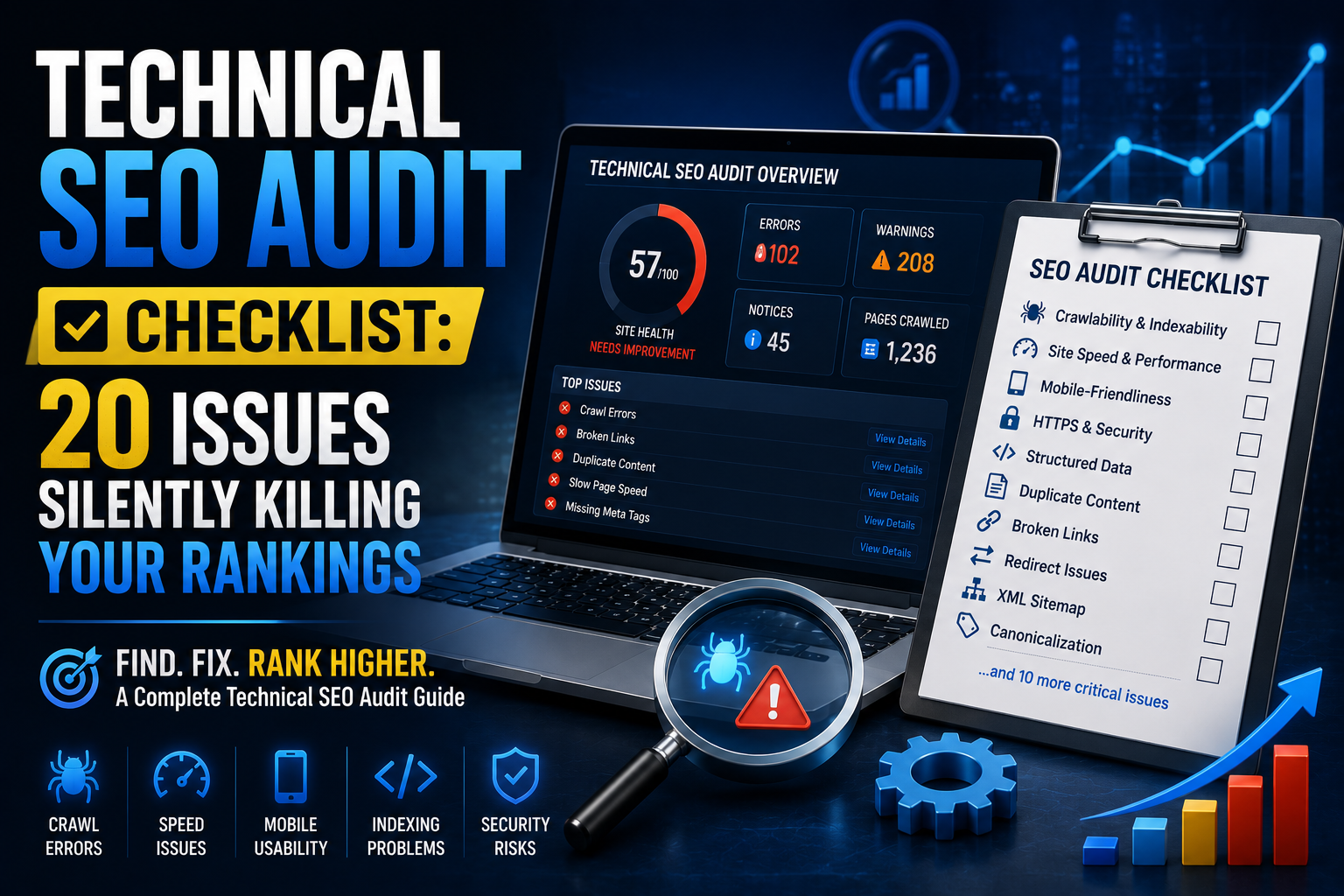
- Ignoring technical SEO — beautiful content on a slow, broken site won’t rank well.
- Buying low-quality backlinks — this can trigger penalties rather than boosting rankings.
- Neglecting mobile users — a significant share of your traffic likely comes from mobile devices.
- Publishing and forgetting — content needs occasional updates to stay competitive.
Final Thoughts
SEO in 2026 rewards genuine value over shortcuts. The websites that consistently rank well are the ones that deeply understand their audience, deliver a smooth user experience, and build real authority in their niche over time.
If you’re feeling overwhelmed trying to manage all of this alongside running your business, that’s completely normal — SEO is a long-term, multi-layered discipline. Working with a team that understands both the technical and content sides of SEO can save you months of trial and error.
Ready to build an SEO strategy that actually delivers results? Eleysign helps businesses across the US, UK, and Europe grow their organic visibility with data-driven, ethical SEO strategies. Get in touch to see how we can help your website rank higher and convert better.
Frequently Asked Questions
1. What is the most important SEO ranking factor in 2026?
Search intent alignment remains the single most important factor. Content that precisely matches what users are searching for consistently outperforms content that’s simply keyword-optimised.
2. How long does it take to see SEO results?
Most businesses start seeing meaningful improvements within 3 to 6 months, though competitive industries may take longer. SEO is a long-term strategy, not an overnight fix.
3. Do backlinks still matter for SEO in 2026?
Yes, but quality matters far more than quantity. A few links from authoritative, relevant websites are more valuable than hundreds of low-quality links.
4. How does AI affect SEO rankings?
AI-powered search features like Google AI Overviews are changing how results are displayed. Optimising content to directly answer questions clearly and concisely helps improve visibility in these AI-generated results.
5. Is technical SEO still necessary if my content is good?
Absolutely. Great content on a slow, poorly structured, or insecure website will still struggle to rank. Technical SEO and content quality work together, not separately.